



Where is Torrevieja?
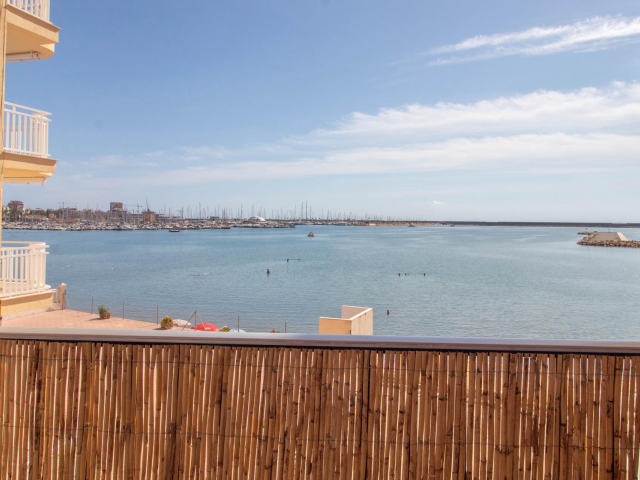
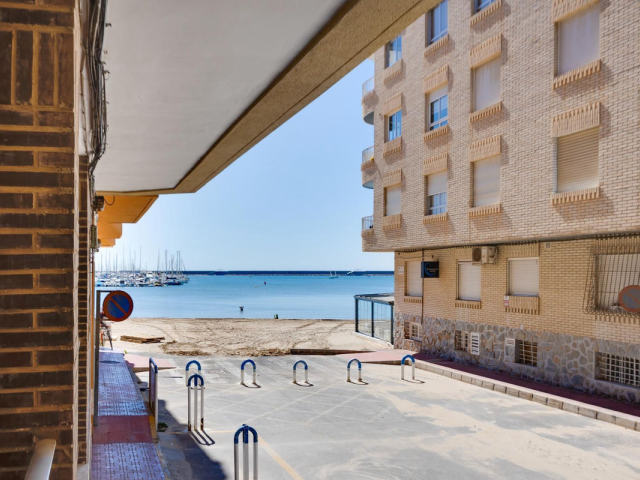
Torrevieja sits on the Mediterranean coast in the province of Alicante, in the Valencian Community. Its seafront faces east, so mornings on the promenade are bright and sunny.
Location in short:
- Roughly 50 km south of Alicante city, between Guardamar del Segura and Orihuela Costa, with easy access to the AP-7 and N-332.
- A municipality of about 71 km² with 98,533 registered residents at the start of 2025, so it is a town rather than a holiday complex.
- Inland of the town lie two salt lakes. The Parque Natural de las Lagunas de La Mata y Torrevieja is one of the most important wetlands in Europe and is still worked for salt.
The pink colour of the Torrevieja lagoon is real, caused by micro-algae that thrive in extremely salty water. Flamingos breed in the park in large numbers.
What is it like to live in Torrevieja?
Torrevieja is busy, practical and open all year. That is its main difference from the smaller resorts nearby: the supermarkets, banks, dentists and bakeries do not close in November.
The town has supermarkets, pharmacies, sports facilities, schools, private clinics and restaurants spread across a wide urban area. For hospital care, many residents use the Hospital Universitario de Torrevieja, and there is also the private Quirónsalud Torrevieja.
Daily life is easy for newcomers. Around 30 per cent of residents are international, and there are English-speaking businesses, social groups and international food shops. Spanish still helps, but you will not be stuck without it.
For shopping and markets, the Habaneras shopping centre covers fashion and homewares, and the Friday street market is one of the largest in the area for produce, clothes and household goods.
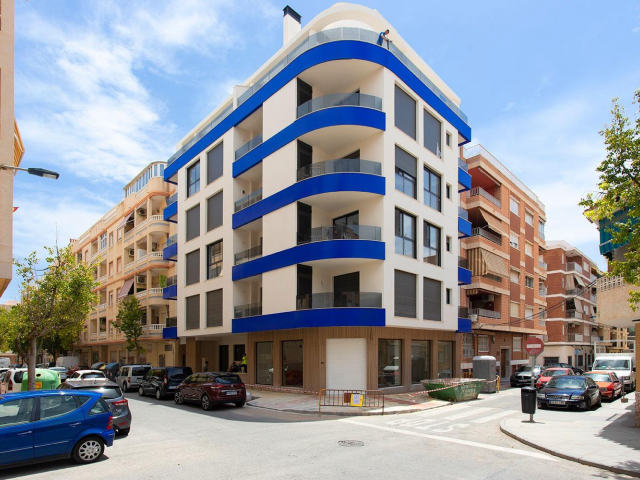
Be honest with yourself about the character. Central Torrevieja is dense, with tall apartment blocks and real traffic in August. The centre is livelier and more Spanish in its everyday rhythm, while some outlying urbanisations are quiet in winter and only fill up in holiday season.
How much does property cost in Torrevieja?
All figures below come from our own listings at the time of writing (September 2026). They are typical midpoints, not averages of the whole market.
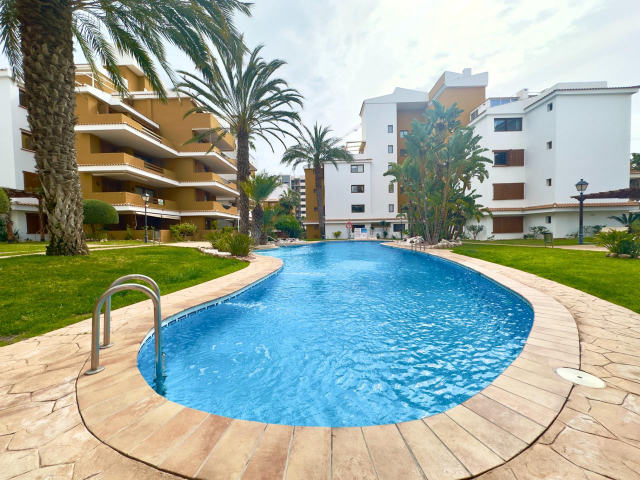
- Apartments: the midpoint is around €260,000, with plenty of older two-bedroom flats below €200,000 and modern beachside units well above.
- Penthouses: around €300,000.
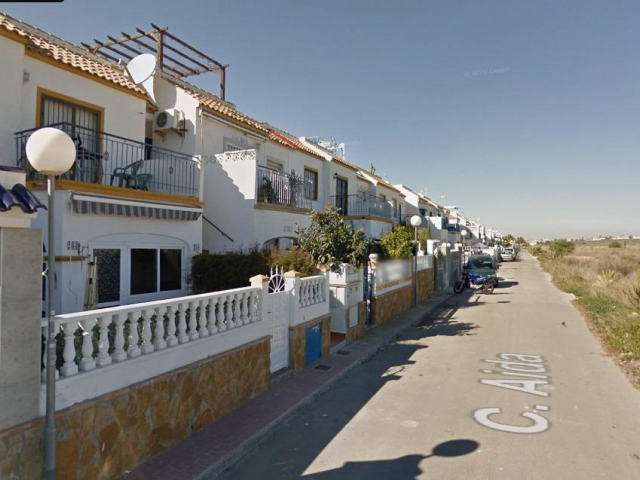
- Bungalows: around €187,500, usually on a community with a shared pool.
- Duplexes and townhouse-style homes: around €235,000.
- Detached houses: around €286,500.
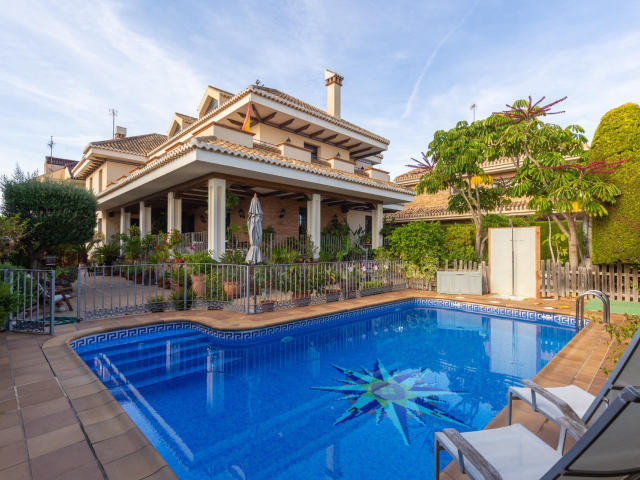
- Villas: around €595,000, rising to a few million at the very top of the seafront market.
The typical home we list here is a two-bedroom property of about 88 m² built, roughly 500 m from the sea. Around 45 per cent of our Torrevieja listings have a pool, private or communal, and about 28 per cent are new build.
Very low asking prices do exist in Torrevieja, from the tens of thousands upwards, but at that level you are usually looking at a garage, a small commercial unit or a very dated studio needing full renovation.
Buying costs: on a resale, transfer tax (ITP) in the Valencian Community is 9 per cent, rising to 11 per cent on the part above €1M from 1 June 2026. On a new build you pay 10 per cent IVA plus 1.4 per cent stamp duty (AJD).
Which part of Torrevieja should I look at?
Torrevieja is made up of many distinct neighbourhoods, and they feel very different from each other.
- Central and seafront: apartments within walking distance of the shops and the sand. Playa del Cura is the main town beach, with man-made coves and a sandy bay next to the promenade.
- North towards La Mata: quieter and greener. La Mata keeps a village feel, and its beach runs for about 2.3 km with protected dunes. Torre del Moro sits on the cliffs between the two, with sea views.
- Residential inland areas: Los Balcones and La Siesta offer more space, more bungalows and detached homes, and better value per square metre. You will want a car.
If you plan to live here all year, walkability matters more than a sea view. If you are buying a holiday home, being within a few hundred metres of a beach or a busy promenade will serve you better.
How far is Torrevieja from the beach, the airport and the golf?
Beaches. The town has a run of sandy beaches along its own coastline. The main ones are Playa del Cura, Playa de los Locos, Playa de los Náufragos, the Paseo Marítimo Juan Aparicio stretch and Playa del Acequión, with Playa del Cura the most popular and a regular Blue Flag winner. The promenade also has sheltered sea pools protected by stone jetties, which make for calm bathing.
Airports. Alicante-Elche (ALC) is about 35 km away in a straight line, which is roughly 40 to 50 minutes by car. Región de Murcia (RMU, Corvera) is about 44 km in a straight line, usually 45 to 60 minutes by car.
Golf. Torrevieja itself has no course, but several sit within a short drive inland and south: Villamartín Golf and La Marquesa Golf at Ciudad Quesada are both about 15 minutes away, with Real Club de Golf Campoamor, Las Ramblas, La Finca at Algorfa and Las Colinas Golf & Country Club typically 20 to 30 minutes. That makes the town a sensible base for golfers who also want a town on their doorstep.
Who buys in Torrevieja, and does it rent well?
Buyers here are a real mix. Retired and semi-retired British, Scandinavian, Belgian, Dutch, German and Polish buyers all feature strongly, alongside Spanish owners and younger remote workers.
Two things keep pulling people in. The first is price: Torrevieja remains one of the better-value parts of the Costa Blanca. The second is the fact that everything works in winter, which suits anyone planning to stay for several months a year or move permanently.
Renting out. Demand is long, roughly Easter to October, plus a steady winter market of northern European long-stay tenants. Properties near the promenade, Playa del Cura or La Mata beach let most easily. If short-term holiday letting is part of your plan, check the tourist licence position for the specific building and community before you commit, as rules and community statutes vary.
If you would like a straight opinion on a particular street or block, come and see us at our office in Cabo Roig, or browse the Torrevieja homes listed above.
Frequently asked questions
Is Torrevieja quiet in winter?
The town centre stays open and reasonably busy all year, as it has a large permanent population. Some outlying urbanisations feel much quieter between November and March, so visit in winter before you buy.
Do I need a car in Torrevieja?
Not if you buy centrally or near the seafront, where shops, beaches and buses are within walking distance. In inland areas such as Los Balcones or La Siesta a car makes daily life far easier.
Do the salt lakes smell or attract mosquitoes?
The lagoons are a protected wetland and part of a working salt industry, so you may notice a salty, mineral smell on some days near them. Most residents consider the air quality and the birdlife a benefit rather than a drawback.
What are community fees like?
They vary a lot: a small block with no pool can be under €50 a month, while a large complex with pools, gardens and lifts can run to several hundred euros a quarter. We give you the exact figure for any property before you make an offer.
Are there international schools near Torrevieja?
There are state schools throughout the town plus private and bilingual options in the wider area, including Orihuela Costa and towards Elche. We can point you towards current choices, but you should contact the schools directly about places and fees.
Can non-residents get a Spanish mortgage here?
Yes. Spanish banks commonly lend to non-resident buyers, usually up to around 60 to 70 per cent of the valuation, and you should budget for purchase taxes and fees on top of the price.