
Where is Playa de los Naufragos?
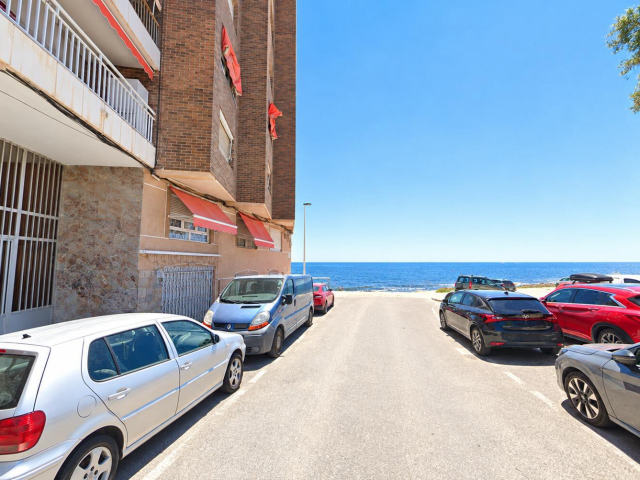
Playa de los Náufragos is one of the most southerly beaches in Torrevieja, roughly two kilometres from the historic centre. The name is used both for the beach and for the homes in the streets behind it.
To the north the beach meets the salt conveyor belt that carries salt from the lagoons to the port, with Acequión beach just beyond it. To the south the coast becomes rocky, in the San Roque neighbourhood.
Keep going south and you reach La Veleta and then Orihuela Costa. Head north along the promenade and you are quickly in the port, the shops and the Torrevieja seafront.
What is it like to live in Playa de los Naufragos?
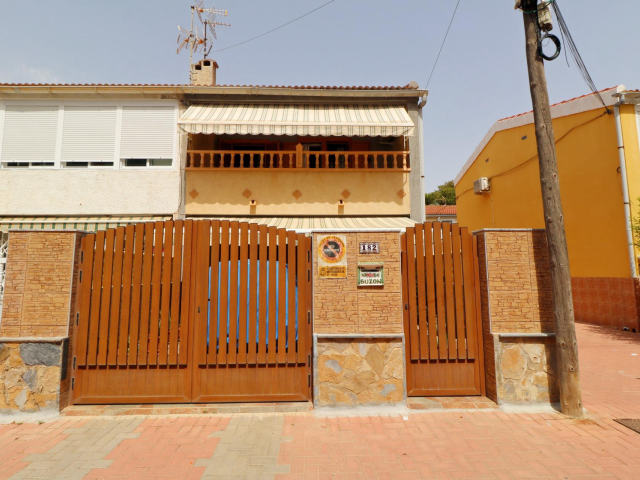
It feels calmer than the centre of Torrevieja but is still fully part of the town. You get a mix of apartment blocks, older Spanish second homes and newer developments, with pavements, bus stops and everyday shops rather than a resort feel.
The San Roque area behind the beach has long been a second-home district for families from the inland Vega Baja towns, and its streets are named after those towns. That gives the area a Spanish, local character, especially outside July and August.
The beach is around 300 metres long with fine golden sand and shallow, usually calm water. It has lifeguards in season, ramp access, showers, toilets, sun lounger hire, a children's play area and volleyball and beach football space.
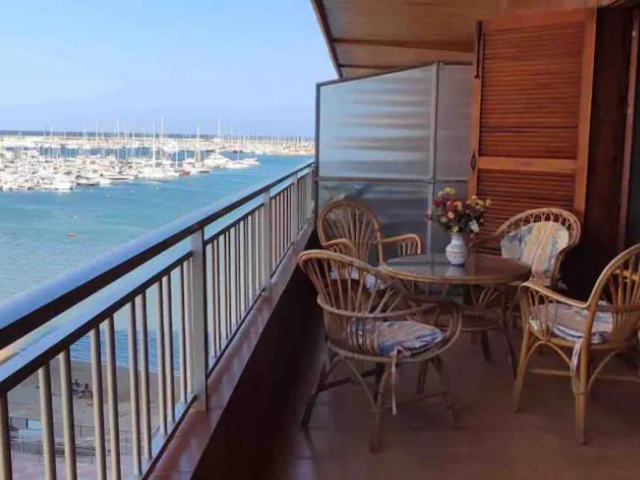
Two honest points. First, this is a working port town: from the southern end of the beach you can watch ships loading salt, which some people find interesting and others find industrial. Second, parking in the side streets gets busy on summer afternoons.
Day-to-day life is easy. Torrevieja's Friday market is one of the largest in Spain, the town has a public hospital, large supermarkets and a long promenade that runs north towards La Mata, and the salt lagoons are minutes away for walking and birdwatching.
How much does property cost in Playa de los Naufragos?
At the time of writing (September 2026), homes we are selling here sit between about €110,000 and €470,000. The median asking price is around €235,000.
Almost everything on the market is an apartment, with the odd duplex or house. Typical homes are two bedrooms and around 70 to 75 m² built, and the median apartment price is close to €250,000.
- Resale apartments, older blocks: the lower end, from roughly €110,000 to €180,000, usually two bedrooms and in need of some updating.
- New build and recent apartments: most of the current stock, commonly €230,000 to €330,000 depending on floor, terrace and distance to the sea.
- Larger or top-floor homes with big terraces: up to around €470,000.
About half the homes here come with a communal pool, which matters if you plan to let the property. On costs: resale purchases in the Valencian Community pay 9% transfer tax (ITP), rising to 11% on the portion above €1M from 1 June 2026. New build is 10% IVA plus 1.4% stamp duty (AJD).
How far is Playa de los Naufragos from the beach and the airport?
Most homes here are within a five to fifteen minute walk of the sand, and many are only a couple of streets back. The town centre and port are around 20 to 25 minutes on foot, or a few minutes by car or bus.
For flights, Alicante-Elche (ALC) is normally around 45 minutes to an hour by car, and Región de Murcia (RMU, Corvera) is around 50 minutes to an hour. Both are straightforward motorway drives, so weekend trips home are realistic.
Is Playa de los Naufragos good for golf?
Yes, if you like being close to the sea but within a short drive of several courses. Villamartín is about 6 km away as the crow flies, with Campoamor and Las Ramblas a little further, and Las Colinas around 11 km.
La Marquesa at Ciudad Quesada, Lo Romero, La Finca at Algorfa and Vistabella are all within about 15 km. In practice that is a 15 to 30 minute drive for a wide choice of courses, without paying golf-front prices for your home.
Who buys here, and is it a good place to rent out?
Buyers here are a mix. Spanish families from the inland towns have owned second homes in San Roque for decades, and they are joined by British, Scandinavian, Belgian, Dutch, German and Polish buyers looking for a walkable coastal base rather than a golf urbanisation.
It suits people who want a beach on the doorstep, shops and healthcare in the same town, and no need to drive every day. Retired couples and part-year owners do well here, as does anyone who wants a lock-up-and-leave apartment.
For letting, the combination of a Blue Flag family beach, a promenade and town amenities is a strong one, and demand runs from Easter through to late autumn. A community pool and air conditioning help, and you will need a tourist licence for short-term holiday lets.
If you would like a quieter, more established alternative, compare it with La Siesta or La Ciñuelica and Villa Rosa. And if you want to talk it through, our office is in Cabo Roig, a short drive south: call in, send us a message, or have a look at the homes listed above.
Frequently asked questions
Why is it called Playa de los Náufragos?
The name means "beach of the castaways". The beach has no natural shelter, so boats caught in storms were historically driven ashore here.
Is the beach clean and safe for children?
It holds a Blue Flag and several quality and environmental certifications, and it is cleaned regularly. The water is shallow and usually calm, with lifeguard towers staffed in the summer season.
Does the salt conveyor and port spoil the area?
It depends on your taste. The salt belt runs along the northern edge of the beach and ships load salt at the port nearby, which gives the view a working, industrial element rather than an untouched coastline.
Can I live here all year round?
Yes. This is a residential part of Torrevieja with shops, buses, schools and a public hospital in the town, so it stays open and functional through the winter.
Are there new build apartments available?
Most of what we currently sell here is new or recently built, generally two-bedroom apartments in small blocks, often with a communal pool. New build is taxed at 10% IVA plus 1.4% stamp duty.
Do I need a car if I buy here?
Not for daily life, as the beach, shops and bus stops are walkable. A car is useful for golf, the big supermarkets, the airport and trips inland.