Few topics cause as much anxiety among foreign property owners in Spain as squatters — or okupas, as they are known locally. Stories of homes being occupied while owners are away, combined with headlines about slow eviction processes, have made this one of the most frequently asked questions at Mediter Real Estate.
The good news is that the situation is more nuanced than the media often suggests, and there are concrete steps you can take to protect your property.
What Is the Okupa Phenomenon?
The term okupa refers to a person who enters and lives in a property without the owner’s permission. There are broadly two types: organised squatters who deliberately target empty properties, and vulnerable occupants in situations of economic hardship. The vast majority of illegal occupations affect bank-owned properties, empty social housing, and long-term vacant homes.
The Legal Framework: Why Eviction Can Be Slow
Spanish law distinguishes between two criminal offences:
Allanamiento de Morada (Breaking into an Occupied Home)
If someone enters your habitual residence, this is classified under Article 202 of the Penal Code. Police can act immediately. Eviction through the courts is typically faster — days to weeks. Punishable by 6 months to 4 years in prison.
Usurpación (Occupying an Empty Property)
If someone occupies a property that is not a habitual residence, this falls under Article 245.2. This is a lesser offence. The eviction process can take several months to over a year. Punishable by a fine of 3 to 6 months’ income.
Key takeaway: Your best protection is ensuring your property is classified as a morada (a home clearly in use).
Recent Legal Changes: Faster Evictions
- Ley de Enjuiciamiento Civil reform (2018): Express eviction procedure (desahucio exprés) introduced.
- Ley 5/2018: Allows communities of owners and the public prosecutor to initiate eviction proceedings.
- Increased police powers: Police are more willing to act quickly, especially within the first 48 hours.
Despite improvements, prevention remains significantly more effective than cure.
How to Protect Your Property: Physical Measures
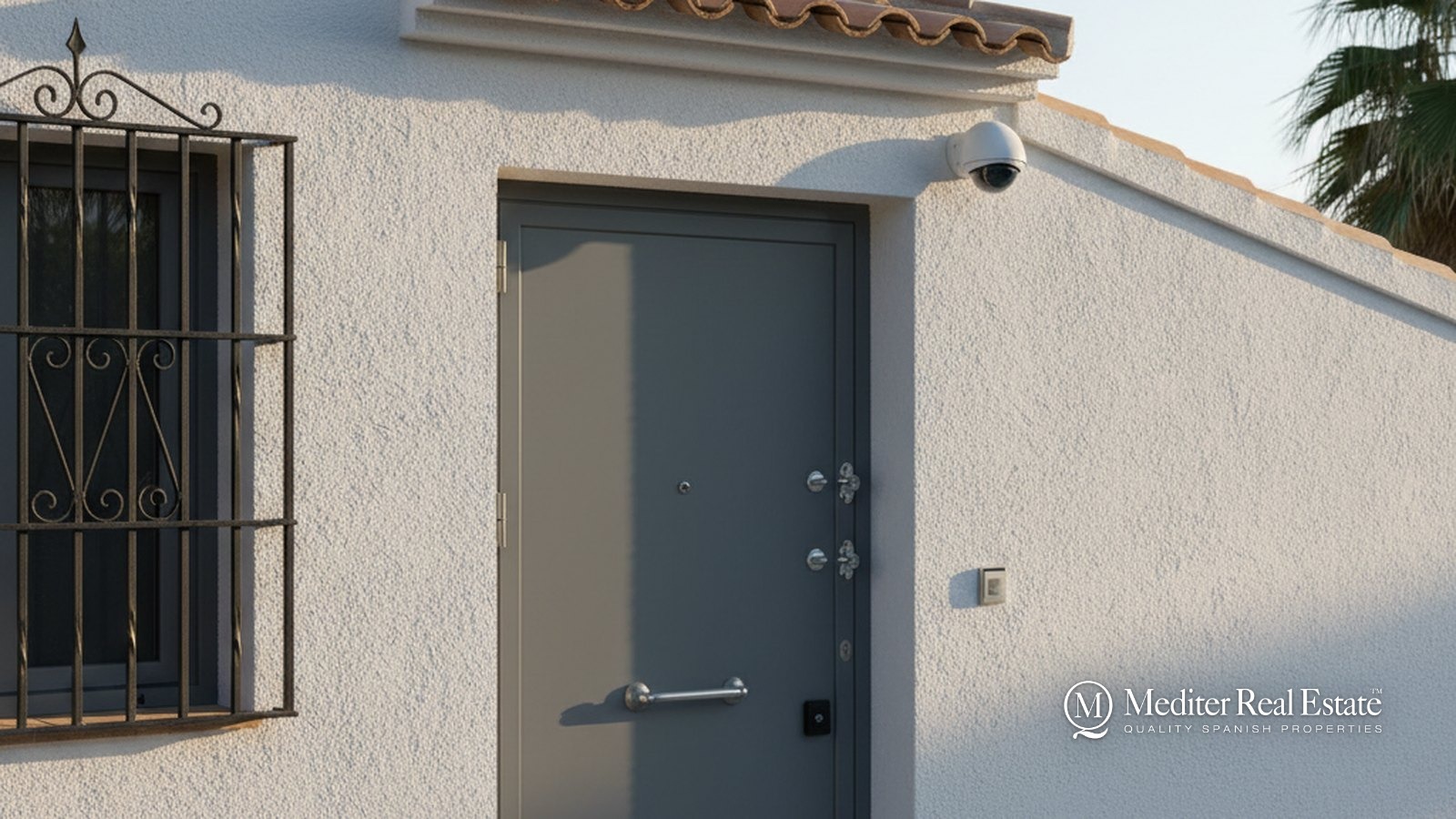
Reinforced Doors and Locks
- Install a security door (puerta de seguridad) with multi-point locking
- Use anti-snap, anti-bump, anti-pick cylinder locks
- Secure ground-floor windows with security bars (rejas)
Alarm Systems and Security Cameras
- A monitored alarm system with visible external siren is one of the most effective deterrents
- Install security cameras covering entry points (display video surveillance sign as required by law)
- Smart home systems with remote monitoring via smartphone
Lighting and Appearance
- Timer-controlled lights to simulate occupancy
- Keep exterior well-maintained — overgrown gardens signal absence
- Arrange for regular post box clearing
Legal and Administrative Measures
Establish Your Property as a Morada
- Register on the padrón (municipal register)
- Keep the property furnished with utilities connected
- Maintain regular utility usage
- Make regular documented visits
Property Management
- Appoint a property manager or trusted contact for regular inspections
- Ask your community of owners to notify you of anything unusual
- Consider short-term letting during periods of absence
Insurance
- Some policies include squatter protection (protección anti-okupa)
- Dedicated anti-squatter insurance: €100 to €400 per year
- Covers legal costs for eviction, locksmith services, sometimes temporary accommodation
What to Do If Squatters Enter Your Property
Do:
- Call the police immediately (112 or 091)
- Provide proof of ownership (escritura, nota simple, utility bills)
- Document everything with photographs and videos from outside
- Contact a property lawyer
- File a denuncia (formal police report)
- Notify your insurance company
Do Not:
- Do NOT try to evict squatters yourself — you could face criminal charges
- Do NOT cut off utilities — considered a criminal act
- Do NOT hire unofficial eviction services using intimidation or force
- Do NOT negotiate directly without legal advice
The Eviction Process and Timeline
For a morada: 2 weeks to 3 months. For usurpación of a vacant property: 6 to 18 months. Legal costs: €1,500 to €5,000.
Holiday Homes: Specific Risks
- Extended absences make properties more vulnerable
- Difficulty proving morada status if used only weeks per year
- Distance means delayed awareness of occupation
Precautions for Holiday Home Owners
- Invest in a monitored alarm system with smartphone alerts
- Build relationships with neighbours
- Use a local property management company for regular inspections
- Keep utility contracts active
- Leave the property looking lived-in
- Register a trusted person with local police
Keeping Perspective
The vast majority of illegal occupations affect bank-owned or long-term vacant properties, not private holiday homes. The risk to a well-maintained, alarmed property with regular oversight is relatively low. That said, prevention is always worthwhile.
Protect Your Spanish Property — Mediter Real Estate Can Help
Mediter Real Estate helps property owners across the Costa Blanca, Costa Cálida, Costa del Sol, and Costa Almería protect and manage their investments.
Get in touch with our team today.
 Autor Nicki Price, CEO