 Skriven av Nicki Price, CEO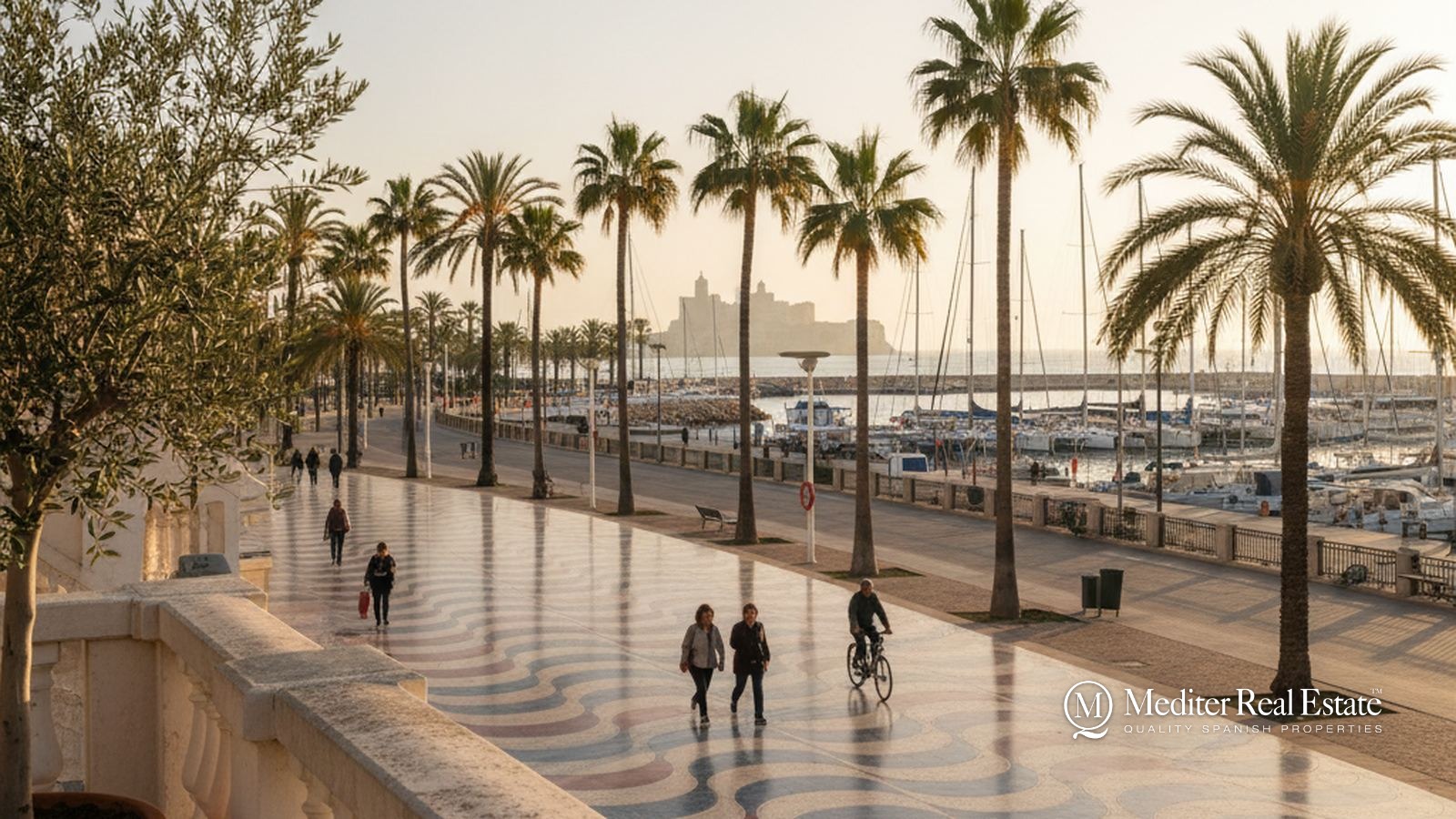
Alicante is the capital of the Costa Blanca and one of Spain’s most underrated Mediterranean cities. With its stunning castle perched above the harbour, palm-lined promenades, vibrant food scene, and year-round sunshine, Alicante offers both visitors and residents a quality of life that rivals anywhere on the Spanish coast.
Whether you are planning a visit, considering buying property in Alicante, or already living here, this guide covers the best things to do, the top neighbourhoods, property insights, and everything you need to know about living in Alicante.
Perched on Mount Benacantil 166 metres above the city, this medieval fortress offers panoramic views over the harbour, city, and coastline. Free entry. Take the lift from Postiguet Beach or walk up from the old town.
Alicante’s iconic promenade, paved with 6.6 million marble tiles in a wave pattern. Lined with palm trees, cafés, and market stalls. Perfect for an evening stroll.
The old quarter at the foot of the castle. Narrow whitewashed streets, colourful houses, bougainvillea, and hidden plazas. One of Spain’s most photogenic neighbourhoods.
Award-winning archaeological museum tracing the history of Alicante province from prehistory to the modern era. Interactive exhibits and beautifully curated.
The city’s main beach, right below the castle. Blue Flag status, soft sand, calm waters, and a promenade lined with restaurants.
A 20-minute boat ride from Alicante port, Tabarca is Spain’s smallest inhabited island. Crystal-clear waters, a marine reserve perfect for snorkelling, and simple seafood restaurants. A must-do day trip.
Historic architecture, walkability, cultural attractions, and vibrant nightlife. Apartments from €1,800–€3,000/m². Best for couples and professionals.
Alicante’s premium beach area with a 7km sandy beach, modern apartments, tram connection, and excellent restaurants. €2,000–€3,500/m². Best for families and beach lifestyle.
Residential peninsula between Postiguet and San Juan. Rocky coves, quiet streets, local feel. €2,200–€3,200/m². Best for those seeking tranquillity near the centre.
Sheltered bay area north of the centre. Family-friendly with a calm beach and good schools nearby. €1,800–€2,800/m².
University town bordering Alicante. Affordable, well-connected by tram, strong rental demand from students. €1,200–€1,800/m². Best for investors.
Alicante offers excellent value compared to other Spanish coastal cities. Average prices €1,800–€2,500/m² city-wide. Strong rental demand from tourists, students, and expats. ITP in the Valencian Community is 10%.
Alicante’s cuisine centres on rice dishes — arroz a banda, caldero, and paella. The Mercado Central is a foodie destination. The El Barrio area has dozens of tapas bars. Playa San Juan has beachfront dining.
The Hogueras de San Juan (June) is Alicante’s biggest fiesta — bonfires, fireworks, parades, and all-night parties. Moros y Cristianos celebrations take place across the province. Semana Santa processions are atmospheric.
Over 300 days of sunshine. Average winter temperature 12–17°C, summer 25–32°C. Beaches include Postiguet, San Juan (7km), Urbanova, and dozens more along the Costa Blanca coast.
Alicante-Elche Airport (ALC) serves 15M+ passengers with direct flights across Europe. The TRAM light rail connects the city to beaches and coastal towns. RENFE trains run to Madrid, Barcelona, and Valencia. The AP-7 motorway links the entire Costa Blanca.
Hospital General Universitario de Alicante is the main public hospital. Private options include Hospital Vithas Medimar and Clínica HLA Vistahermosa. International schools in the area include King’s College and El Valle International School.
Monthly costs for a couple: approximately €1,800–€2,800 including rent, utilities, groceries, and transport. One of the most affordable cities on the Mediterranean coast.
Mediter Real Estate helps buyers find their ideal property across the Costa Blanca, Costa Cálida, Costa del Sol, and Costa Almería.
Contact us today for a free consultation.
Det du berättar här använder vi bara för att svara dig. Privacy
Vi använder cookies som behövs för att webbplatsen ska fungera. Med ditt samtycke använder vi också cookies från Meta (Facebook) för att mäta våra annonser och visa dig bostäder som liknar dem du har tittat på. Cookies från Google Analytics, också bara med ditt samtycke, räknar besök och visar oss vilka sidor som hjälper.
Cookiepolicy