 Autor Nicki Price, CEO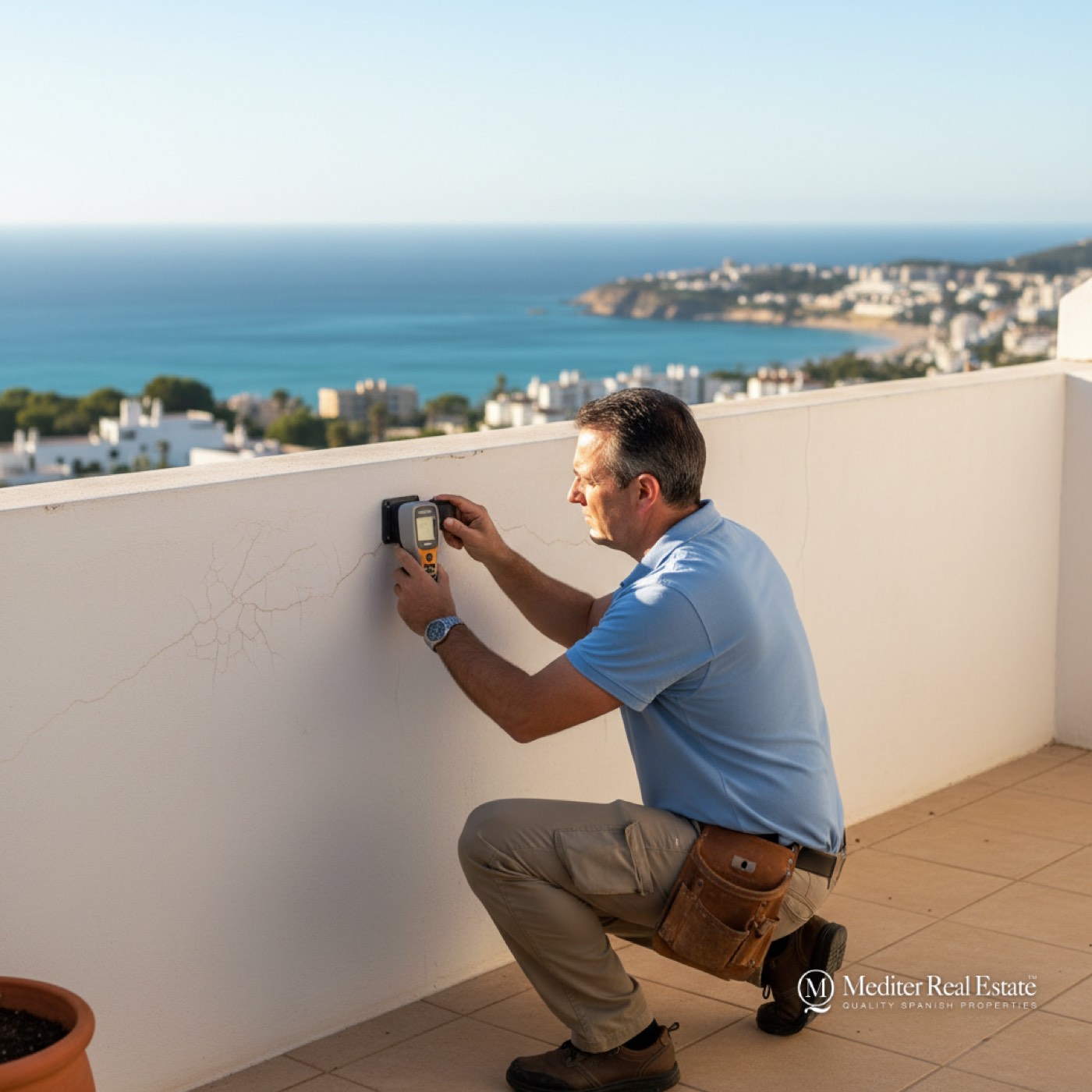
For most international buyers on the Costa del Sol, the honest answer is yes — a survey is worth it, especially on any resale property over about 15 years old, anything on a slope, and anything with a pool, roof terrace or basement. A private building survey by a Spanish arquitecto técnico typically costs €300–€900 depending on property size, and it routinely uncovers issues — damp, failed terrace waterproofing, subsidence cracks, illegal extensions — that cost far more than that to fix or to walk away from. On a €400,000 villa, a €500 survey is roughly 0.12% of the price. It is the cheapest insurance you will buy in the whole transaction.
The catch is that in Spain a survey is not a legal requirement and not part of the standard conveyancing process, unlike in the UK where a mortgage lender usually forces a valuation. Your Spanish lawyer checks the legal title; the notary confirms the identity and debts of the property; but nobody automatically checks whether the building is physically sound unless you commission it. This guide explains what a building survey covers across the Costa del Sol, Costa Blanca, Costa Cálida and Costa Almería, what it costs in 2026, and when you can reasonably skip it.
In Spain the professional who inspects the physical condition of a building is usually an arquitecto técnico (building surveyor/technical architect) or an arquitecto superior for more complex structural work. This is a different role from the estate agent, the lawyer and the notary. It is also different from the bank valuation (tasación): a tasación exists to tell the lender what the property is worth for mortgage purposes, not to warn you about a cracked retaining wall.
A private survey delivers a written report — often called an Informe Técnico or ITE-style report — covering the condition of the structure, roof, walls, installations and any defects visible on inspection. Some firms aimed at foreign buyers issue the report in English, which matters if you want to negotiate with the findings.
They are not the same thing. A structural/condition survey is for resale property and assesses an existing, usually older building. A snagging inspection is for brand-new builds and lists cosmetic and finishing defects the developer must fix before you complete. If you are buying off-plan or new, read our dedicated snagging inspection checklist for new builds instead — and note that a new build also needs its First Occupation Licence before completion.
Fees vary by property size, age, complexity and how far the surveyor has to travel, but the ranges below are representative across the four costas in 2026. Prices are usually quoted plus 21% IVA.
| Type of report | What it covers | Typical fee |
|---|---|---|
| Basic condition survey (apartment) | Visual inspection, damp, installations, obvious defects | €300–€500 |
| Full survey (villa/townhouse) | Structure, roof, terraces, pool plant, drainage, boundaries | €500–€900 |
| Structural report (cracks/subsidence) | Detailed structural assessment, cause and remedy | €600–€1,200+ |
| Rural / large finca survey | Above plus water, septic, boreholes, legality of build | €700–€1,500 |
| Add-on: measured floor plan / area check | Confirms built area vs cadastre / escritura | €150–€350 |
Put this in context. Buying costs on top of the price already run to roughly 10–13% for a resale and 12–15% for a new build — transfer tax (ITP), or IVA plus stamp duty, plus notary, land registry, lawyer and gestoría. A survey adds a fraction of a percent and can save you a five-figure sum. For a fuller picture of the transaction costs, see our region-by-region comparison in the Costa Blanca vs Costa del Sol coast comparison.
A competent survey is far more than a walk-through. On a typical hillside villa near Mijas, Estepona or Benalmádena, expect the surveyor to assess:
This is the crucial distinction. Your lawyer reviews the paperwork; the surveyor reviews the bricks. A structural survey typically reveals problems that no legal check can catch: penetrating damp behind fresh paint, a subsidence crack disguised by furniture, corroded rebar (aluminosis and concrete cancer affect some 1960s–1980s coastal blocks), a leaking pool, or an extension that was never declared.
The physical survey works alongside — not instead of — your legal due diligence. Some defects are structural and legal at the same time. A surveyor may spot a terrace enclosure or extra bedroom that isn't on the plans; your lawyer then checks whether it was legally declared, whether it needs regularising and whether it exposes you to a fine. On the Costa del Sol and Costa Almería, rural and semi-rural builds frequently have undeclared work — which is why the AFO certificate for illegal rural builds and the distinction between rústico and urbano land matter so much.
Alongside the survey, always insist your lawyer pulls a fresh nota simple to confirm ownership, charges and embargos. The nota simple and the survey together answer the two big questions: can they legally sell it, and is it physically worth what they're asking?
| Property situation | Survey advice |
|---|---|
| Villa on a slope with retaining walls (typical Mijas, Benahavís, Mojácar) | Essential — subsidence and wall failure risk |
| Resale over 25 years old | Essential — waterproofing and installations near end of life |
| Any visible cracking or damp staining | Essential — structural report |
| Rural finca or village house (pueblo blanco) | Strongly advised — legality, water, roof |
| Property with a private pool | Advised — pool shell and plant checks |
| Modern apartment (under 10 years) in a well-run community | Optional — a basic condition check is enough |
| Bank repossession sold "as seen" | Essential — often neglected; see notes below |
Bank repossessions deserve special caution: they are frequently sold without utilities connected and after years empty. If you're weighing one, read our Costa Almería bank repossession guide — a survey here isn't optional.
The most common mistake is leaving the survey too late. Here's how it should fit:
Note on your arras deposit: if you're on the Costa Cálida, understand exactly what's refundable if a survey kills the deal — we cover this in the reservation deposit guide. A properly drafted "subject to survey" clause protects your money.
Coastal buyers should also layer in flood and setback checks — a survey won't tell you if the property sits inside a protected zone, so pair it with our Ley de Costas setback guide.
No. Unlike some countries, Spain does not require a structural survey to complete a purchase, and mortgage lenders only commission a valuation (tasación) for their own risk, not a condition report for you. Commissioning a survey is entirely your choice — but strongly recommended on older or hillside properties.
Expect roughly €300–€500 for an apartment condition survey and €500–€900 for a full villa survey in 2026, plus 21% IVA. A dedicated structural report for cracks or subsidence can run €600–€1,200 or more. Rural fincas cost more because water and legality checks are involved.
A tasación tells the lender how much the property is worth to decide the mortgage amount. A building survey tells you what physical condition the property is in and what needs fixing. They serve completely different purposes and one does not replace the other.
Yes, and this is one of the best reasons to survey early. Written quotes for repairs — a new terrace membrane, retaining-wall works, rewiring — give you concrete leverage to reduce the price or ask the seller to carry out works before completion.
Not a structural survey — new builds carry a legal defects guarantee from the developer. What you do need is a snagging inspection to list finishing faults before you complete, and confirmation of the First Occupation Licence.
Several firms of arquitectos técnicos across the four costas specialise in foreign buyers and issue reports in English. Mediter can point you to independent, qualified surveyors in the area you're buying in.
A good survey turns an anxious purchase into a confident one — and it costs a fraction of the problems it prevents. Mediter Real Estate works across the Costa del Sol, Costa Blanca, Costa Cálida and Costa Almería, and we can connect you with independent surveyors and lawyers so your due diligence is watertight. Contact Mediter today to discuss a property or arrange a viewing with the right checks in place.
To, co nam tu napiszesz, wykorzystamy wyłącznie do odpowiedzi. Privacy
Używamy plików cookie niezbędnych do działania strony. Za Twoją zgodą używamy też plików cookie Meta (Facebook), aby mierzyć nasze reklamy i pokazywać Ci nieruchomości podobne do tych, które oglądałeś. Pliki cookie Google Analytics, również tylko za Twoją zgodą, liczą odwiedziny i pokazują nam, które strony pomagają.
Polityka cookie